
Tight Vs. Compression Socks: What You Need To Know
Home » Tight Vs. Compression Socks: What You Need To Know
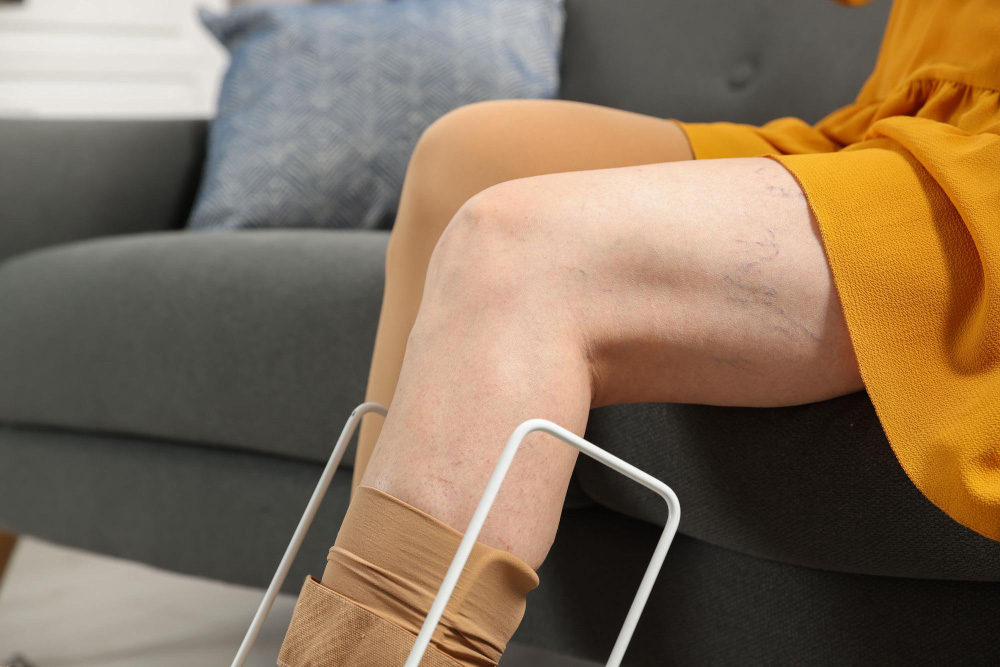
When you are managing fluid retention from lymphedema or dealing with DVT and varicose veins, the instinct is to find something that holds your legs firmly. Some mistakenly believe that any snug hosiery or elastic garment will provide the necessary relief. But how do tight socks vs. compression socks compare in this regard?
The design of our compression socks from MAPS revolves around mapped tension. We use soft bamboo fibers to make graduated pressure compression socks that support your veins without the painful pinching associated with ordinary tight clothing.
The Risks of Uniform Restriction
When comparing compression socks vs. tight socks, the primary difference lies in how the pressure is distributed across your limb. An ordinary tight sock applies a uniform squeeze around the leg, which can inadvertently trap blood in the feet rather than helping it move upward. This type of restriction often leaves deep indentations in the skin and can aggravate symptoms of edema by acting as a tourniquet.
Unlike these standard elastic options, specialized hosiery is built with a pressure gradient that is firmest at the ankle and gradually loosens as it reaches the knee. This design is what allows the garment to act as a pump for your circulatory system rather than a barrier.
Why Leggings Cannot Substitute Compression Socks
In recent years, the trend of high-performance athletic gear has led many to wonder about compression socks vs. tight pants for managing daily fatigue. While leggings and tight trousers might provide a subtle sense of compression, they generally lack the specific ankle-to-knee gradient required to combat serious fluid retention or deep vein issues.
Tight pants often apply the most pressure to the thighs or waist, which does very little to help your calves move blood back toward the torso. To experience a real change in how your legs feel, compression socks focus on the lower extremities, where blood and fluid are most likely to pool.
How Compression Socks Work
The effectiveness of compression lies in its ability to support the one-way valves inside your veins. When these valves are reinforced from the outside, they can close more effectively, preventing blood from leaking backward and causing the bulging associated with vascular issues. A standard tight sock simply cannot provide this level of support because its elasticity is not mapped to the body’s circulatory needs.
Finding the Best Fit
The most common reason people settle for standard tight hosiery is the frustration of finding specialized gear that fits their specific body type. If a medical-grade sock is not sized correctly, it can feel like punishment.
Our wide calf compression socks provide the necessary tension without rolling, digging, or restricting blood flow, as is typically the case with poorly fitted alternatives. When the fabric is allowed to sit flush against the skin without overstretching, the mechanical benefits are maximized, leading to a much more energized and comfortable daily experience.
Give Your Legs the Assist They Need
Your legs do a lot of heavy lifting, especially when health conditions make it harder for your veins to keep up. Adding a layer of support can give your body a hand so it doesn’t have to work twice as hard just to keep fluid moving.
Take a look at our range of breathable compression socks to see how a specialized design can make a noticeable difference in your daily comfort. Talk to us to learn more about how to choose the right support for your legs.